



From politics to engineering manager: how Wiebke Söhrens found her way into tech
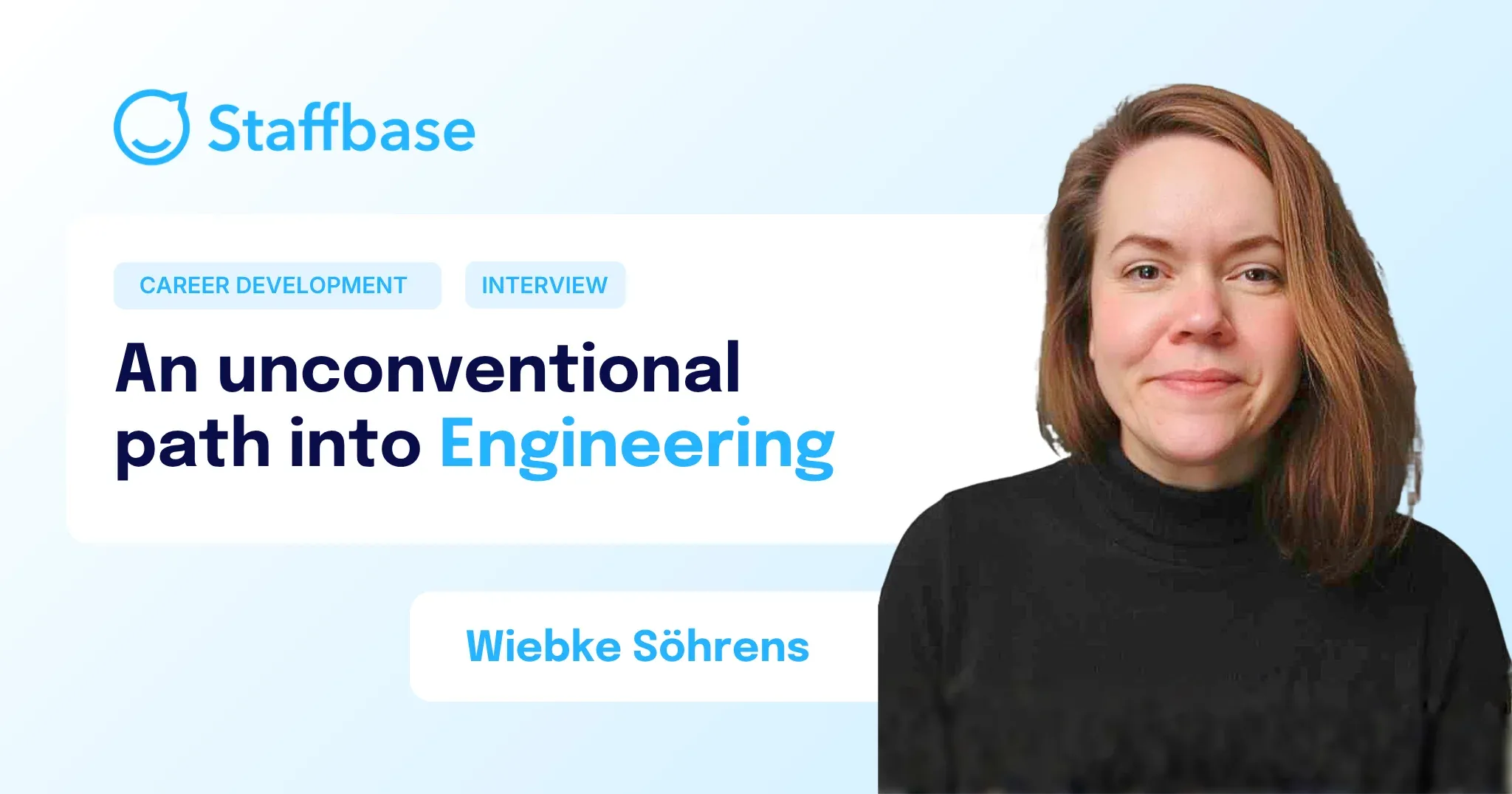

You're an engineering manager now — but that wasn't the plan, was it?
Wiebke: Not even close. In school, I wanted to become a journalist. But most journalists studied something else first, so I looked into psychology, archeology, and medicine. I ended up opting for psychology, couldn't get a place in Germany, moved to the Netherlands, failed my Dutch state exam, and switched to European Studies which was taught in English, so at least I wouldn't have to move again.
I actually loved it and continued with International Relations in the UK for my master's. After that, I landed two internships in Berlin: one in journalism, one in politics. Both were mostly unpaid.
So how did you end up in engineering?
Wiebke: Honestly? It was random. I ended up in Berlin because it seemed cool, and I ended up in tech because I needed a job. I was running out of money and working several jobs at once. When I saw project assistant roles open at an IT consultancy, I applied. What I didn't expect was to enjoy it so much.
I grew from "set up a team calendar" to heading the rebuild of a key account's websites. I was always at the intersection of business and tech — using SQL to understand why the business model and technical model were saying different things, running Design Thinking workshops with customers, adjusting code in the browser to meet a customer need in the room.
Everything technical, I learned on the job or on the side. But critical thinking, communication, knowing how to collaborate across differences — that comes from years of studying humans, politics, and conflicts. In the age of AI, it turns out those are the skills that matter most.
What does your team at Staffbase actually build?
Wiebke: My team owns Content Management; whether it's setting up a page manually, with the help of AI, or using AI to create and control content. The most interesting technical challenges right now are feature migrations. I've handled a few, and what fascinates me is how deceptively complex they are. On paper they look straightforward, but once you dig in, you realize they touch almost everything. You need alignment across multiple teams, deep understanding of how customers use the system, and serious engineering problem-solving.
I've also been part of developing our AI features and learned an enormous amount from our product managers and engineers along the way.
After 15 years in tech, what keeps you at Staffbase?
Wiebke: I've worked in quite a few places. What keeps me here is rare: I've never met so many extremely competent and kind people in one place. In other companies, it was often either/or.
Our engineering leadership is genuinely open to criticism. Decisions are based on the strength of the argument, not titles or backgrounds. We've built intentional spaces to invest in each other and the quality of our work: the Machine Room, our AI-in-Engineering community, and Architecture Advisory Forums where we align on technical decisions.
In other companies I've been at, your title and experience determined your voice. Here, a good argument matters more than your seniority.
What does your day-to-day actually look like?
Wiebke: I have a lot of meetings and a lot of messages. There are blockers, somebody needs help, somebody is asking for alignment, or there's a small crisis. I have 15 people reporting to me, and I check in with all of them to make sure they feel supported and have everything they need to do well.
I'm often in the room when technical decisions get made — not to make them, but because the things I'm responsible for live in the details. Delivery risk, customer impact, team alignment: Those don't announce themselves. I have to listen for them.
If you're curious about what this partnership between engineering management and technical leadership looks like in practice, one of our Staff Engineers and I will give a talk at JUG Saxony Day in September 2026: "Staff Engineers & EMs: From Pitfalls to Partnership — How Two Leadership Roles Transform Responsibility, Trust, and Friction into Effective Partnership."
What's your honest take on being a woman in engineering leadership?
Wiebke: What's gotten better: At Staffbase, I can be a present mom and be taken seriously as a leader — all at once. The flexibility to work from home and organize my day around my kids without sacrificing my effectiveness as a manager matters enormously. That's rarer than it should be.
What still needs work: I'm not convinced the overall trend is upward. Women in engineering are still grossly underrepresented, and those who make it in are still being evaluated on how likeable they are rather than how good they are. I've lived both. I've been told I was "too direct" in rooms where male colleagues saying the same thing were called decisive.
My response is to build teams where the work speaks loudest and to make sure the women I manage never shrink themselves to seem more palatable.
If someone with an unconventional background asked whether they'd fit in at Staffbase, what would you tell them?
Wiebke: Definitely apply. We're more interested in what you can do than how you learned it. We have quite a few colleagues without a formal university degree. Be prepared that we'll ask you to show us your skills — but that's the point. I've hired people with unconventional backgrounds myself and wasn't disappointed.
What I look for is the same thing Staffbase looked for in me: curiosity and creativity that outpaces credentials.
What's one thing you'd want every candidate to know?
Wiebke: We have high expectations. We invest in ourselves and our customers heavily, and we'll invest in you. Our hiring process might seem rigorous, but it's intentional — and I've never regretted that investment.
Wiebke Söhrens is Engineering Manager for Content Management and Autopilot at Staffbase in Berlin. She studied European Studies and International Relations before switching to tech. Want to work with her? Check out our open engineering roles.