



The engagement problem is not a distribution problem. It is a governance problem, a clarity problem and a reach problem, writes Frank Wolf. He explains why attempting to solve disengagement with AI won't work.
As HR has recently taken the helm of AI transformation at many organizations, driving adoption among employees has increasingly become a top priority. But as many workforces have now deployed AI across their practices, the challenge is shifting—it’s no longer just about getting workers to use AI, but doing so in an efficient and effective way that captures its potential.
For the past decade, employers have worked hard to close the gap between office-based and frontline employees. They have invested in wellbeing programmes, communication platforms, digital benefits and employee experience initiatives designed to ensure that everyone, regardless of where they work, feels connected, informed and supported.
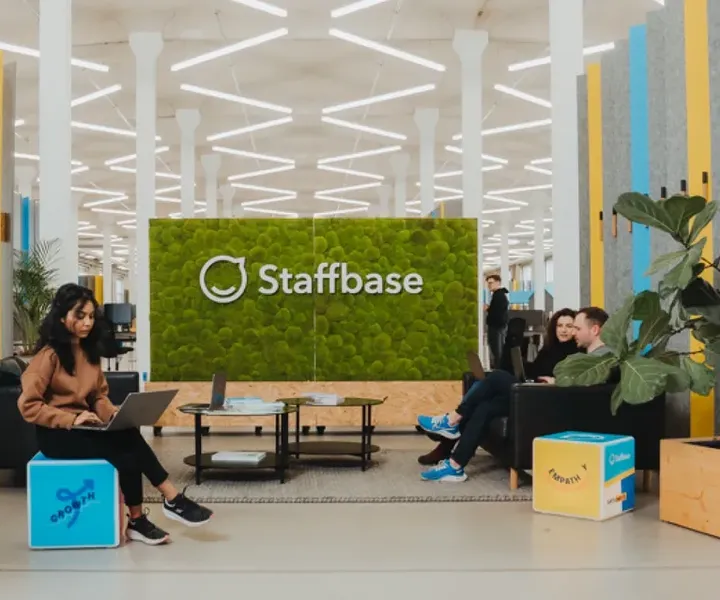
Staffbase has been named to Ragan’s HR Technology Hot List, which recognizes standout HR technology providers whose products, platforms and solutions are helping organizations improve the employee experience, support workplace communication, strengthen engagement and deliver meaningful results for employers and employees.
Around 80% of the global workforce is deskless, yet the current corporate buzz is entirely focused on desk-based AI tools. Why are frontline workers being left behind in the AI revolution, and what are the hidden risks of this oversight?
Staffbase has released research suggesting many Australian executives still treat artificial intelligence as an IT function, exposing gaps in governance and internal communication.
Nearly every employee at Staffbase, an employee experience platform, is out of office each Friday in August.
Richmond, Virginia-based prodealer Lansing Building Products is on a mission to build the strongest relationships in the industry — a goal spelled out in black and white in the company’s Vision 2030 strategy.
The modern corporate landscape currently boasts some of the most sophisticated AI infrastructure in history. Yet, if a person on the shop floor, a nurse in a ward, or a driver in a warehouse cannot access basic information, the organisation is not truly digitally transformed. Leadership is simply shouting into a void.
As AI automation sweeps through the enterprise, experts like Fujitsu’s Dippu Singh, Wildix’s Rob Loake, and Staffbase’s Eva Spatz warn that saving time isn’t the same as creating value. True ROI, they argue, depends on how organizations reinvest the minutes AI frees up
The real impact of AI on intranets isn’t replacement — it’s exposing a deeper challenge most organizations haven’t solved.
Hype claims AI agents will collapse the $200 billion SaaS industry, but that misses reality: enterprise software exists to stabilize complex organizational behavior, not just automate tasks. While AI excels at pull (answering questions), strategic workplace systems must push context, align leaders, and establish authority - something an autonomous agent notification cannot do.