

Discover the top AI trends in HR for 2026


Let’s be honest: Few departments have had a more complicated relationship with technology than HR. For years, every “revolutionary HR tool” promised to banish paperwork forever, only to leave us with 12 dashboards, 9 logins, and mild existential dread.
Initial uses of generative AI produced dazzlingly enthusiastic job descriptions … sometimes for roles that didn’t exist.
These trials underscored a key lesson: AI is powerful, but it still needs human oversight and context.
Generative AI has grown from novelty to necessity, now serving as a creative assistant rather than a wildcard.
HR teams treat AI like a talented junior colleague who is capable and imaginative, yet guided by human judgment.
The result: faster, more accurate, and more compliant content that still sounds authentically human.
Artificial intelligence is moving from buzzword to backbone in HR. By 2026, over 80% of HR departments are expected to use generative AI or predictive analytics in daily operations, according to Greenhouse. Furthermore, 62% of polled HR professionals believe AI can help them hire the best person for the job.
These technologies are reshaping how teams create content, analyze talent data, and personalize employee experiences. Yet the goal isn’t to replace people; it’s to strengthen human connection through more innovative processes.
This guide explores the most significant AI trends in HR and internal communications set to define 2026. From content generation that lightens administrative loads, to analytics that identify engagement risks before they escalate, we’ll look at how data‑driven innovation can make HR faster, sharper, and more responsive.
Prepare for less spreadsheet juggling, more meaningful work, and technology that works with people, not instead of them.
The year HR & AI confidently join forces
Let’s be honest: Few departments have had a more complicated relationship with technology than HR. For years, every “revolutionary HR tool” promised to forever banish paperwork, only to leave us with 12 dashboards, 9 logins, and mild existential dread.
Early experiments with generative AI in HR were a bit … brave. The language models could write wonderfully enthusiastic job descriptions — though occasionally these positions didn’t exist. We all know by now that AI makes mistakes. But the real issue was adoption uncertainties, a lack of training, and poorly established governance.
By 2026, plenty of information will be available to accelerate seamless AI in HR adoption, and fears have largely been replaced by a hunger to adapt. By 2026, AI will have gone from experimental prodigy to reliable business partner. Once viewed with a mix of curiosity and caution, it’s now part of the HR team’s daily rhythm. Generative AI and predictive analytics help craft communications, surface insights, and personalize employee experiences — at scale and with precision.
Today, HR professionals treat AI like a bright junior colleague: brimming with ideas, always learning, and highly effective with the proper guidance. The result? Content that’s both creative and compliant, data that tells meaningful stories, and strategies that keep people, rather than processes, at the center.
This guide explores how to optimize and embrace the leading AI trends shaping HR and internal communications in 2026. The focus isn’t just on what AI can do, but on how organizations can use it thoughtfully to amplify culture, strengthen engagement, and deliver business impact. All without sacrificing authenticity.
Where HR is winning with generative AI
Quick first drafts: Policies, culture stories, training scripts — first versions appear in seconds, leaving humans to finesse tone.
Brand-safe consistency: AI-enabled employee engagement platforms like Staffbase Employee AI operate within secure ecosystems, helping teams maintain consistent tone and accuracy without exposing internal language to public models.
Inclusive language checks: Generative AI can scan for bias and rephrase statements to reflect company values before publishing.
Localization at scale: Translation finally sounds natural — idioms cross borders without getting lost, and “team spirit” doesn’t need a dozen rewrites to make sense.
The new rules of responsible creativity
Human review matters: AI can draft, but people understand timing and tone.
Transparency = trust: Tell employees when AI helps with content. Surprises belong in birthday parties, not memos.
Data stays home: Avoid feeding confidential text to open models, which is why in‑platform tools win.
By 2026, most HR teams aren't experimenting with AI; they're improving how they use it. Automation supports content creation, predictive analytics guide workforce decisions, and intelligent tools elevate the quality of employee communication. The challenge has shifted from adoption to advancement: how to use AI responsibly, align it with company culture, and maximize its value without losing the human voice.
Looking back, 2026 will be viewed as the turning point, with advanced AI now being able to convert messy HR data into structured formats that support:
Workforce forecasting
Analyzing talent needs
Retention forecasting
Personalized development pathways
Strategic Hiring Intelligence
This is where AI-enabled employee engagement platforms like Staffbase support organizations in integrating AI securely, so teams can scale personalized communication, improve accessibility, and stay focused on what drives engagement: people.
 Trend 1: Employing generative AI for smarter HR comms
Over the past twenty years, HR software has evolved from simple administrative tasks such as payroll and data entry to advanced, cloud-based platforms that utilize AI, analytics, and mobile accessibility.
This transformation has improved the entire employee lifecycle by emphasizing personalized experiences, making data-driven decisions (like talent analytics), and automating complex processes (including hiring, onboarding, and learning) to enhance efficiency and engagement. As a result, HR has transitioned from a personnel function to a strategic business partner, harnessing real-time insights and self-service tools.
By now, every HR professional has surely encountered the time-saving benefits of AI-assisted writing: You fine-tune a prompt, and suddenly, writing memos has become a whole lot quicker — often in a more articulate manner than you could manage before your morning caffeine kick. Generative AI is quickly becoming an indispensable partner for crafting clear, consistent human resources content that resonates with employees.
What’s actually happening
According to a recent Gartner survey, an overwhelming 76% of HR leaders believe that organizations that fail to adopt and implement AI solutions in the next few years will fall significantly behind their competitors that do. This belief highlights the shift towards technology-driven HR practices.
The most common applications of generative AI within the HR domain include drafting job postings, developing onboarding materials, creating policy explanations, and producing personalized newsletters tailored to employee interests.
The productivity impact of these innovations is truly remarkable. HR writers, who once dedicated entire afternoons to perfecting a benefits announcement, can now produce multiple versions in minutes. This newfound efficiency allows them to redirect their time toward refining the message's tone, ensuring inclusivity, and injecting personality into their communications.
The human twist
Despite the advantages of AI, it is essential to acknowledge that it still requires editorial supervision. When left unchecked, AI can occasionally overlook corporate nuances or even fabricate benefits that have not been approved. The key lies in fostering a partnership in which AI serves as a consultation source, while humans take on the directing role and provide the oversight needed to maintain comprehensiveness and engagement.
AI-native employee experience platforms like Staffbase incorporate generative capabilities into communication workflows. This integration ensures that HR messages consistently reflect the brand's voice and maintain accuracy, while also alleviating the pressure of tight deadlines.
Grounded takeaway
AI isn’t replacing communicators; instead, it’s equipping them with a more powerful, articulate microphone that amplifies their message.
Trend 2: Predictive people analytics — data without the crystal ball drama
Traditionally, the realm of predictive analytics has been characterized by a complex blend of analysts, extensive data warehouses, and nerves of steel required to make sense of intricate findings.
However, in 2026, the landscape is shifting dramatically. Advanced artificial intelligence is poised to revolutionize the field by packaging sophisticated analytics into user-friendly tools. These innovations will empower HR teams to uncover meaningful patterns that can be strategically utilized for organizational benefit.
Practical use cases include
Identifying turnover risk signals: By analyzing engagement trends, commute data, and internal mobility patterns, organizations can spot early indicators of attrition risk and intervene more thoughtfully.
Forecasting workforce capacity needs: As organizations prepare for seasonal surges or departmental reorganizations, predictive analytics will enable them to accurately forecast workforce capacity needs. This foresight will help ensure that the right talent is in place when demand peaks.
Identifying personalized learning paths: By analyzing data to identify correlations between specific learning opportunities and subsequent promotions, organizations can better tailor their training programs to individual employees, thereby enhancing career development and retention.
A 2025 PwC study highlighted the significant advantages of adopting AI-driven analytics. Organizations using these tools reported more informed and consistent decision-making, along with lower rates of regrettable attrition.
The reality check
Despite promising developments in predictive analytics, it is crucial to acknowledge that the value of these insights is fundamentally tied to ethical data use. Over-interpretation or inherent biases in the data can swiftly erode trust within the workforce, arguably faster than an unanticipated organizational restructuring. Consequently, governance councils within HR departments are now rigorously vetting algorithmic models with the same diligence they would apply to developing policies that impact employees.
Using consolidated dashboards, Staffbase Smart Impact enables teams to blend engagement metrics with insights into message performance. This integration fosters a clearer understanding of what resonates with employees, while maintaining data privacy and protecting sensitive information.
Bottom line
In essence, predictive analytics in HR does not require supernatural foresight. Instead, it transforms the principles of robust data hygiene into a proactive and strategic framework for human resources. By effectively utilizing data, organizations can elevate their HR strategies, ensuring they remain competitive and respectful of their employees' needs in an ever-evolving work environment.
Trend 3: Conversational AI chatbots — graduating from FAQ machines
In the early days, chatbots in the Human Resources sector faced significant challenges with even the simplest queries. For instance, asking, “How many vacation days do I have left?” would often result in disappointing responses. Fast forward to 2026, and the landscape has changed dramatically. Conversational AI has matured into a vital self-service tool that provides meaningful answers and can detect when conversations should be escalated to a human for more sensitive handling.
A report cited in WeCP indicates that North America leads AI adoption in HR, with 68% of HR departments using AI tools. So it makes sense that many of these departments are planning further expansions in this area, indicating a strong trend toward increased reliance on AI-driven solutions.
How it’s working today
Today, we see a range of practical applications for these advanced chatbots within the HR domain:
Onboarding bots: These intelligent systems guide new hires through essential day-one logistics, helping them acclimate quickly to their new roles and the company culture.
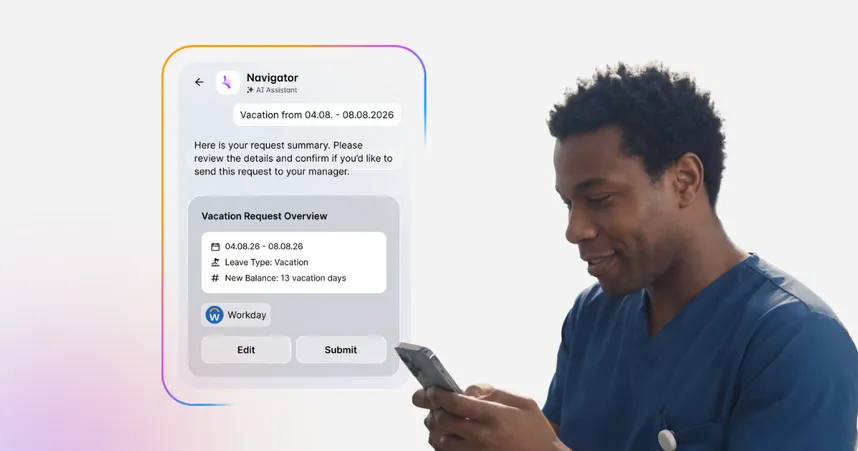
Leave-request assistants: These bots integrate seamlessly with HRIS (Human Resource Information System) data, streamlining the time-off request process for employees and reducing the administrative burden on HR personnel.
Multi-language support hubs: Catering to global teams, these hubs ensure that employees from diverse linguistic backgrounds receive support, thereby fostering an inclusive workplace environment.
These innovative bots not only significantly reduce ticket volumes but also boast rapid response times, with most employees receiving answers in under 20 seconds. This immediacy greatly enhances overall employee satisfaction, significantly outpacing traditional responses like the often-frustrating “We value your patience” emails.
While the benefits are clear and substantial, it is essential to recognize the limitations that remain. Gaps in empathy can arise when AI misinterprets tone or fails to escalate sensitive issues, such as complaints related to employee burnout. In response to these challenges, modern systems have implemented measures to ensure that flagged conversations are promptly routed back to human HR professionals for more sensitive handling, maintaining a vital human touch in the process.
Integrated with internal communication channels, Staffbase’s AI-enabled communication tools combine the efficiency of chatbots with clear pathways for human escalation, helping teams preserve personal connection where it matters most. This integration emphasizes the importance of retaining personal connection even in a tech-driven environment.
Key Takeaway
The most effective HR chatbots do not strive to replicate human behavior; rather, they empower human employees to be more present and engaged in their interactions. This approach fosters deeper connections with employees, ultimately creating a more supportive and empathetic workplace culture. By leveraging conversational AI's strengths while acknowledging its limitations, organizations can enhance employee experiences and satisfaction in profound ways.
Trend 4: Personalized employee experiences — “Netflix for work,” minus the cliffhangers
Few phrases used to strike fear like “You’re talking to an HR bot.” Today, it’s a pleasant experience bordering on sorcery. Modern AI chatbots for HR departments are better at interpreting context and intent — though judgment and nuance still depend on human oversight.
After years of impersonal newsletters and one-size-fits-all portals, personalization in HR communication is finally practical. AI aids HR teams in delivering the right message at the right time to the right audience, all while avoiding the persona of a data stalker.
The growth curve
According to Gallup’s 2025 report, the percentage of U.S. employees who reported using AI at work increased from 40% to 45% between the second and third quarters of 2025.
Examples that stick
Adaptive learning platforms that curate development courses tailored to individual skill gaps.
Internal newsfeeds that prioritize updates relevant to each employee’s specific role or geographic location.
Engagement nudges that remind managers to check in with their teams; sent only when patterns indicate the need for intervention.
Personalization doesn't imply removing human spontaneity; rather, it enhances the ability for relevant communication to break through the overwhelming digital clutter. Staffbase’s AI-native Employee Experience Platform empowers communicators with control over audience segmentation, allowing AI to suggest optimal timing and tone while ensuring that humans maintain cultural relevance at the core of communications.
Reality check
Care must be taken to avoid over-personalization, which can come off as invasive. Providing transparency about the data driving recommendations is as vital as crafting engaging content.
Trend 5: Responsible and ethical AI — from buzzword to baseline
The headline “AI decides promotions” serves as a significant red flag that could easily lead to potential lawsuits and reputational damage for organizations. As 2026 approaches, the integration of responsible AI will evolve from mere ethical consideration to a mandatory compliance requirement for organizations navigating the complexities of HR and technology. In this new era, HR's guiding principle will need to reflect that fairness is a feature, not just an afterthought.
Current momentum
Recent findings indicate a substantial shift in corporate attitudes towards AI ethics. Research shows that 60% of Fortune 500 executives reported that AI governance is critical for their organizations.
In addition to corporate initiatives, regulatory frameworks such as the EU AI Act are playing a crucial role in shaping global norms for transparency and accountability in AI implementations. These regulations not only promote ethical practices but also set the groundwork for what is expected from organizations operating within the realm of artificial intelligence.
Evolving role of HR
The role of HR professionals has evolved remarkably over recent years. What was once a function focused mainly on policy guardianship has transformed into one that encompasses the architectural design of ethical practices in the workplace. Concepts such as algorithmic auditing, bias testing, and data-impact assessments have become part of teams' vocabulary. This shift signifies a deeper understanding that, while powerful, technology carries ethical responsibilities that must be managed.
Communication channels equipped with robust approval workflows, such as those Staffbase creates, support ethical AI governance by maintaining a human review loop for any sensitive messaging that is generated or assisted by algorithms. This approach ensures that critical communications are scrutinized and validated, safeguarding the organization against potential ethical breaches.
Bottom line
Responsible AI for 2026 is not merely about ticking boxes or ensuring compliance; it represents a crucial avenue for proactive risk prevention intertwined with a genuine drive for empathy within organizations.
Embracing ethical AI practices will not only mitigate potential risks but also foster a more equitable and transparent workplace environment, ultimately benefiting both employees and organizations alike. As we move forward, prioritizing ethical considerations in AI will be an imperative that no responsible business can afford to ignore.
Trend 6: Human–AI collaboration (where empathy still wins)
As we approach 2026, the defining question in Human Resources is transforming. It is no longer a matter of whether artificial intelligence will replace us in our roles, but rather how we can gracefully collaborate and work in tandem with it. The integration of AI into the workplace presents an opportunity to reevaluate and enhance our human capabilities, leveraging technology to streamline processes and improve efficiency.
Automation is already proving effective in managing a variety of tasks that can often be time-consuming and repetitive. Functions such as scheduling interviews, generating comprehensive reports, and synthesizing survey feedback are just a few ways AI can assist HR professionals. It allows us to focus on more strategic elements of our roles, freeing up valuable time that can be dedicated to engaging with employees on a personal level and fostering a positive workplace environment.
However, it is essential to recognize what remains irreplaceable in the human element of HR. While AI can process data and perform straightforward tasks, it lacks the emotional context that only humans can provide. Navigating delicate conflicts, understanding the nuances of individual employee experiences, and creating experiences that truly embody our company culture are inherently human skills. We must also remember the importance of interpreting the unspoken elements of communication and relationships within the workplace.
As we embrace the future, the challenge will be to find the right balance between leveraging AI’s capabilities and maintaining the essential human touch that defines successful organizations. By fostering a collaborative environment where technology enhances our strengths rather than replaces them, we can ensure that HR continues to play a critical role in supporting both employees and the overall mission of the company.
This partnership between human intuition and machine efficiency could redefine how we approach talent management, employee engagement, and organizational development in the years to come.
Practical uses
AI compiles an engagement survey summary; HR professionals delve into the nuances behind the data.
Machine learning identifies clusters of absenteeism; managers translate these insights into meaningful wellbeing conversations.
Generative tools produce engaging presentation visuals; leaders utilize reclaimed time for genuine coaching.
Within organizations using platforms like Staffbase, AI supports distribution and analytics tasks, freeing communicators to focus on narrative, context, and trust. The core principle is that while technology enhances accuracy, it is people who amplify trust.
Trend 7: Continuous learning and change adaptation — the new HR superpower
As tools evolve at an unprecedented rate, HR's most valuable asset in 2026 will be learning agility. Teams that prioritize AI literacy will be better equipped to supervise technology rather than fear it.
Evidence
A benchmark study conducted by SHRM surveyed over 1,200 HR professionals. The top three essential skills for leveraging AI in HR are:
Adaptability 65%)
Communication: (65%)
Analytical skills: (61%)
It’s clear that HR departments are placing emphasis on digital fluency training.
Organizations are beginning to treat skills such as prompt writing, data ethics, and model interpretation as foundational competencies. Forward-thinking learning and development programs are aligning employees with AI mentors, such as personalized bots that track learning goals and provide micro-coaching on progress.
Learning hubs integrated within the Staffbase Intranet distribute micro-modules and informative articles, helping to ensure the workforce remains aligned even as tools rapidly evolve.
The evolution of AI technology will not slow down; the intelligent response is to equip everyone to navigate this landscape responsibly.
Trend 8: The future of internal communication — measured, mindful, and (slightly) machine-aided
Internal communication is no longer merely about issuing updates; it’s about creating a spark of alignment among team members. AI plays a supporting role by analyzing engagement metrics, sentiment, and channel performance, which helps to enable communicators to refine their craft based on evidence rather than mere guesswork.
Data snapshot
SQ Magazine reported that in 2025, AI-generated subject lines are used by 58% of marketers, improving open rates by 9.3% on average.
Machines can predict optimal send times, automatically segment audiences, and even advise when silence is the best course of action. However, it is the communicators who will preserve the tone, serving as guardians of empathy, humor, and cultural nuance.
Staffbase utilizes AI support for scheduling, and language insights aid in achieving the delicate balance that blends together automated delivery coupled with a distinctly human tone.
Trend 9: Hyper‑personalized candidate and employee journeys will become the standard
By 2026, personalization will no longer be a differentiator; it will be the baseline. HR teams are moving beyond standardized career paths and “one‑size‑fits‑most” communication strategies toward experiences that adjust dynamically to each individual. What’s making this possible?
A new wave of multimodal AI that can interpret text alongside contextual signals, helping HR tailor experiences with greater relevance and care. Instead of asking, “What role fits this resume?”, AI now asks, “What opportunity best fits this person’s skills, goals, and current reality?” It’s a subtle shift with enormous implications.
From profiles to people
The traditional HR model has treated employees as data points in systems. In 2026, AI enables HR to handle that data with nuance. Generative and predictive models can interpret how someone learns, when they’re ready for new challenges, and even how they prefer to receive feedback. For candidates and employees alike, that means less friction, more relevance, and an experience that feels genuinely human.
Research backs this up. Deloitte’s TMT Predictions 2025 expects that by 2027, half of the companies using generative AI will have launched agentic AI applications capable of performing complex work with limited oversight. The trend for 2026 is clear: if HR addresses AI gaps, they might uncover unexpected benefits. HR teams will finally be free to design experiences around people instead of processes.
AI‑driven personalization examples in action
AI‑enhanced systems assess transferable skills, career intent, and learning agility, suggesting roles that align with personal growth, not just résumé language.
Training content no longer lives in static modules. Learning recommendations adapt in real time based on progress, preferences, and performance data. The right content reaches the right person precisely when they need it.
Instead of generic reminders to “take a break,” AI draws on engagement data to suggest meaningful actions, such as scheduling focus time or revisiting workload balance.
Advanced analytics visualize how each employee’s journey is unfolding—showing HR when to intervene, celebrate milestones, or offer growth opportunities.
Staffbase’s role in this evolution
Personalization works best when it’s embedded in everyday communication, not treated as a standalone HR initiative. That’s where platforms like Staffbase play a practical role. Staffbase helps HR and internal communications teams deliver relevant, context-aware communication at scale by combining an employee-first communications platform with built-in intelligence.
AI can surface patterns — like which employee groups need which information, and when. Staffbase ensures that insight turns into action by delivering messages through the channels employees already use, in language that fits the moment and meets governance standards. The focus isn’t just smarter content creation, but reliable reach, clarity, and follow-through.
What sets Staffbase apart is that it’s not positioned as “another HR system” layered onto an already complex stack. It’s built for the last mile of employee communication: ensuring messages are seen, understood, and acted on. That shows up in practical ways:
A communications backbone, not a feature bundle. Staffbase unifies intranet, employee app, email, and integrations so messages don’t stall in one channel while parts of the workforce are missed. Many tools can help draft content; fewer can consistently deliver it across a distributed workforce with the right controls in place.
Relevance at scale without losing governance. Audience targeting allows teams to tailor communication by role, location, language, or team — without sacrificing tone consistency, approvals, or compliance. Personalization stays intentional, not random.
Actionable insight tied to engagement. Rather than relying on surface-level metrics, teams can understand what employees actually read, engage with, and act on — and use that insight to improve future communication and reduce noise.
Designed for real, mixed workforces. Staffbase is built to reach frontline and non-desk employees with the same reliability and usability as office-based teams, helping close a gap that often undermines HR initiatives.
The takeaway: By 2026, personalization isn’t a differentiator — it’s the baseline. The organizations that get it right will be those that combine AI-driven insight with disciplined communication delivery and clear human ownership.
Want to see how Staffbase powers clear, personalized employee communication?