AI won’t save your employee experience. Trust will.
What VOICES London revealed about governance, trust, and the employee experience layer between you and your frontline.

Marina Petro in Employee Experience
Earlier in my communications career at a global restaurant brand, there was a framework that everyone in the business used regardless of role. It was called R.E.D.: Relevant, Easy, Distinctive. Every decision had to pass three tests. Was it relevant to the customer or audience? Was it easy to access or understand? Was it distinctive enough to stand apart?
I was reminded of R.E.D. last week at VOICES London Staffbase’s annual conference for HR, IT, and communications leaders. Not because anyone talked about it, but because watching the day unfold, I kept thinking about the same thing: the companies that are going to win the next era of employee experience are the ones who can answer those three questions honestly.Because the employee experience platform as a category is now being asked to do something it never had to before. It has to be the layer where trust gets built, where AI gets governed, and where the hardest-to-reach employees finally get reached. Those used to be three separate problems. They’re now a single one and the platforms (and the teams running them) that still treat them separately will be left behind.
TL;DR: Governance, trust, and reach used to be separate conversations, with different owners, different tools, and different ways of measuring success. AI has brought them together. Once an AI layer sits between your content and your employees, you can't be trusted without being accurate, you can't be accurate without governing what the AI draws from, and none of it matters if it never reaches the people doing the work. At VOICES London, leaders from DHL, Cosentino and Kyowa Kirin weren't debating whether AI matters. They were working on what comes after that question: whether the answer that reaches an employee is actually any good.
Why is trust now the operating model, not a soft outcome?
Trust used to be something communications teams hoped to earn as a by-product of doing good work. In 2026, it’s the operating model itself. The thing every other outcome depends on.
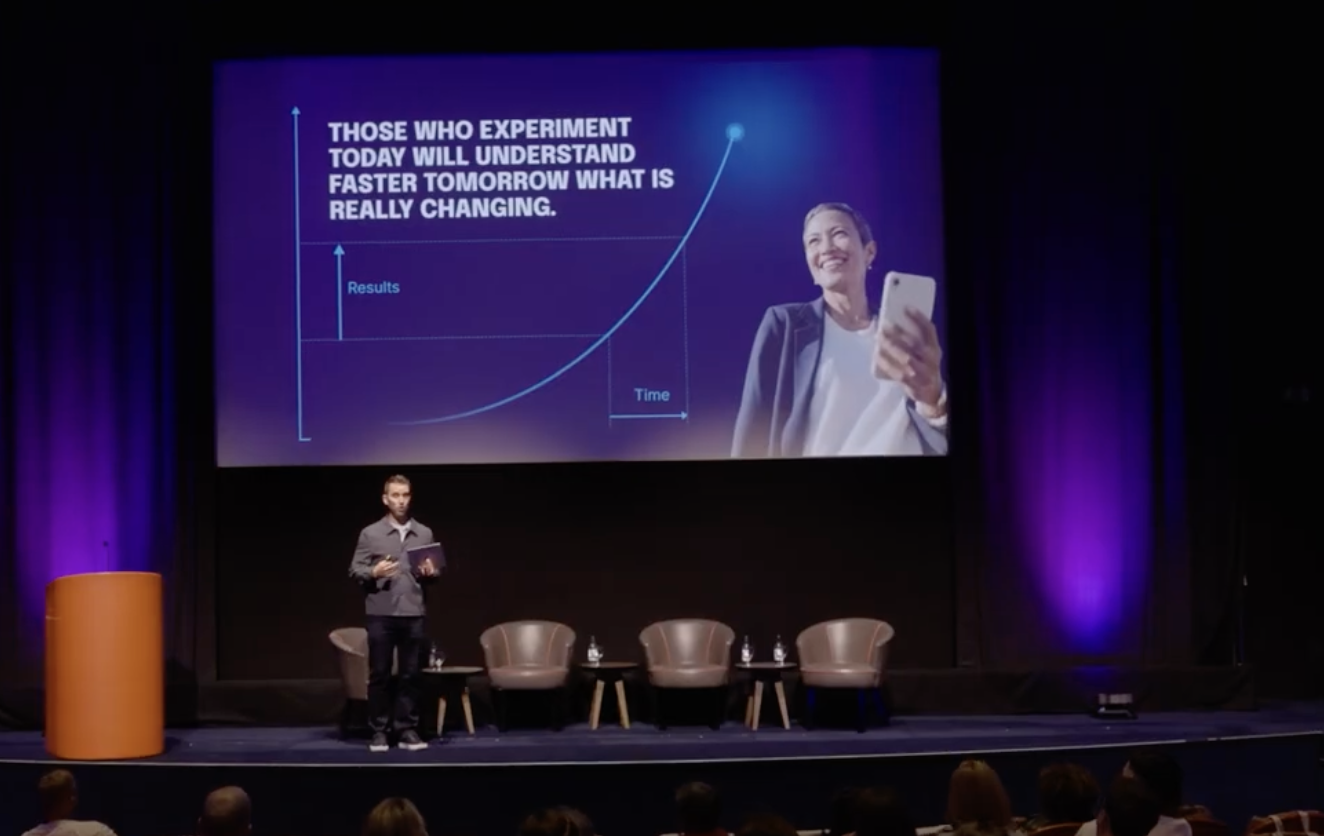
VOICES opened with Jonathan Griffiths, Senior Director of Marketing, in conversation with Steffen Henke, formerly Head of Digital, Employee and Live Communications at DHL. Their framing was that we’re living through a permacrisis, and our workplaces exist in their own micro version of it. The numbers they cited were alarming: one in three employees doesn’t trust their employer, according to the 2024 Edelman Trust Barometer; one in three workers lives with layoff anxiety, per a 2025 Clarify Capital survey; and disengagement now costs the global economy $10 trillion a year, according to the latest Gallup’s State of the Global Workplace.What landed hardest was the argument that trust shouldn’t be a soft outcome of good communication. It should be an active KPI that shapes every decision an Internal Communications or HR team makes. That sounds simple until you try to operationalize it. Most communications teams still measure themselves on reach and engagement, both of which are downstream of whether anyone actually trusts what you’re saying in the first place.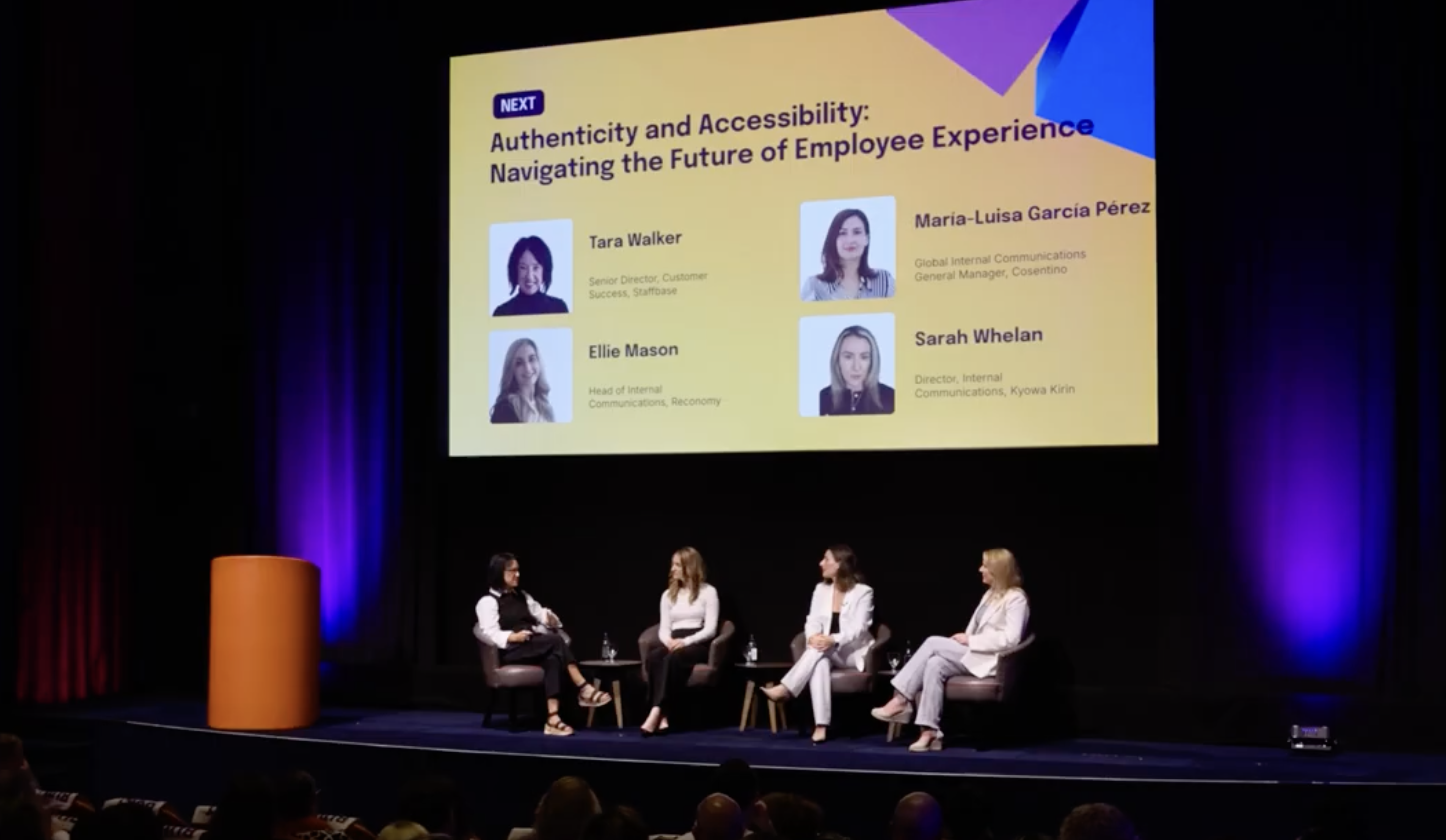
The panel of three Internal Communications leaders featuring María-Luisa García Pérez (Cosentino), Sarah Whelan (Kyowa Kirin) and Ellie Mason (Reconomy) pushed this further, making the case for qualitative insight alongside quantitative measurement. Open rates tell you what happened. They don’t tell you why, and they don’t tell you what your employees actually need from you. Trust gets built by knowing your audience well enough to speak to them on their terms, which means asking, listening, and being willing to act on what you hear.But none of that happens by accident and that was the theme of our guest speaker’s keynote. Performance psychologist Roberto Forzoni has spent three decades inside elite teams coaching the likes of Olympic athletes, Premier League squads, and even as a part of Team (Andy) Murray. His argument was that the teams that thrive are the ones deliberately built for trust, psychological safety and resilience. None of it is luck. He told the story of a Premier League team that tripled its points return in a single season. That kind of turnaround doesn’t happen by chance. Someone designed the conditions for it.
Which is the part most organizations get wrong about AI because trust is all too often assumed, and not designed. The tool gets rolled out on the quiet assumption that belief will follow capability and that if the technology is good enough, people will trust it. But trust is never a by-product of how good the tool is. That holds for the teams deploying AI as much as for the employees on the receiving end. And it’s the clearest explanation for why so many AI initiatives stall. Not because the technology failed, but because no one designed for the trust it depended on.
Why is AI the forcing function?
If trust is the operating model, AI is the forcing function. It is the lens through which every employee experience decision now has to be examined. Frank Wolf, our Co-Founder and Chief Strategy Officer, made the case that comms and HR are shifting from distributing content to designing impact. His line, “almost right is wrong at work,” is the kind of sentence that sounds simple until you really think about it. Internal communications has always lived with a degree of approximation, but in an AI-mediated workplace, that approximation breaks.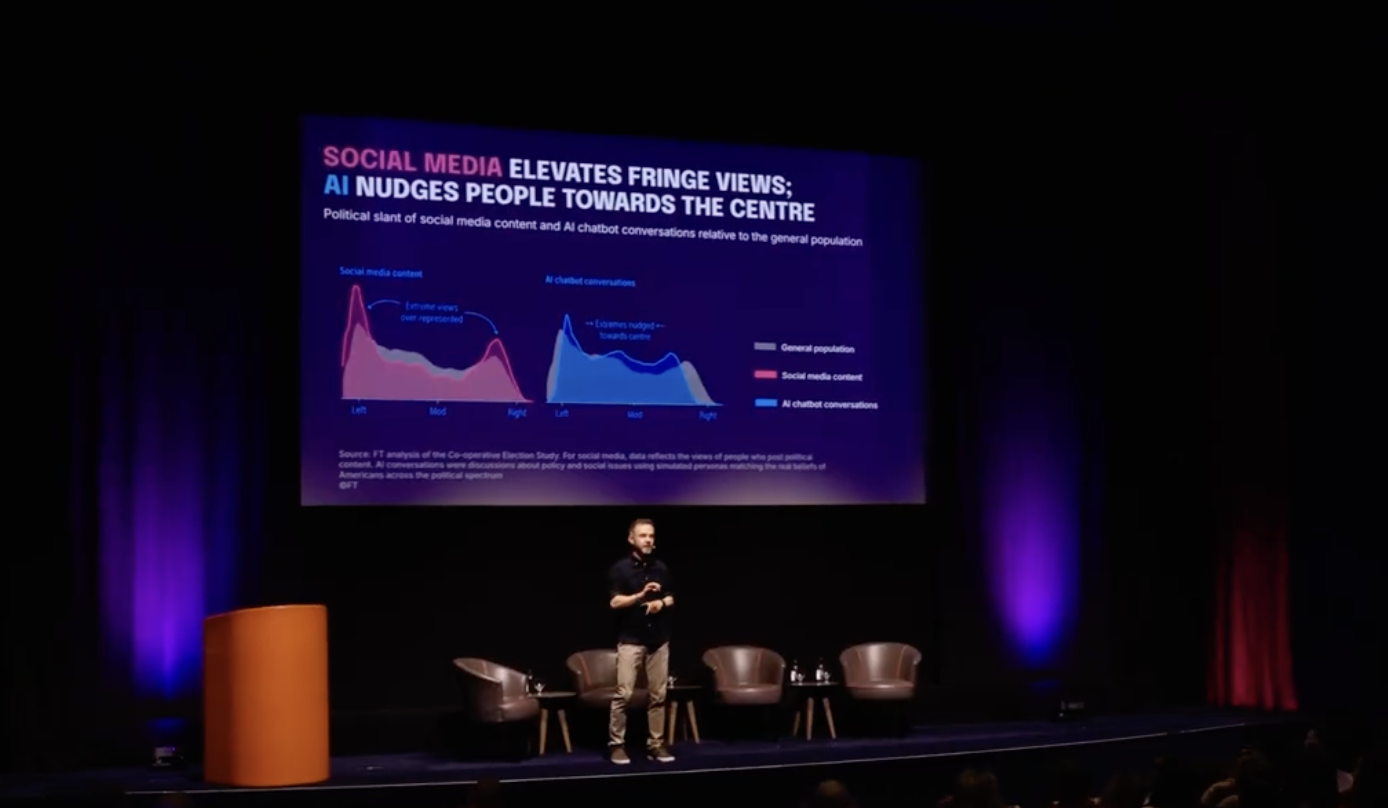
There’s a deeper problem underneath this. AI is exceptionally good at summarizing toward consensus. Ask a generic assistant a workplace question and it hands back the internet’s average answer: fluent, plausible, and more or less what it would tell someone at any other company. It doesn’t know your policies, and it doesn’t know whether it’s answering a shift lead or someone at a desk. When the answer carries no trace of your organization or the person asking, the internal voice and the relevance disappear… and so does the reason employees trust their employer more than almost any other institution: that it came from somewhere they know. The more synthetic the world gets, the more people want an answer that clearly came from somewhere, and someone, they know.
This is the part of the AI conversation almost nobody is having. The industry has spent two years governing what goes into the AI… the security, the permissions, the data controls. Hardly anyone is asking whether what comes out is actually any good. Safe AI is the baseline everyone should already meet. Good AI is the harder problem. And good here has a specific meaning: an answer that’s distinctive, sounds like you and is drawn only from the knowledge you’d actually stand behind. That doesn’t happen by accident either. It happens when humans help govern the organisation’s voice and scope what the AI is allowed to draw from so the answer that reaches an employee still carries the fingerprint of where it came from.
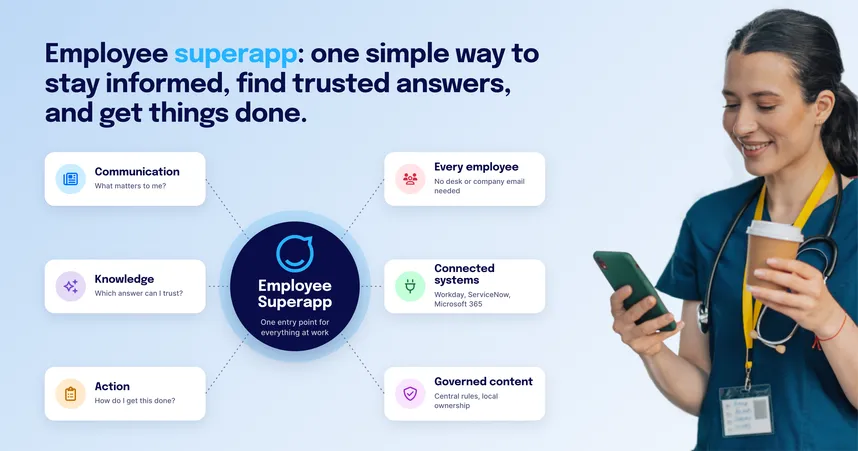
This is why the employee experience platform now has to do something it didn’t have to do five years ago. It has to be the place where content is governed, structured, and written in a way that survives both human attention and AI summarisation. It has to be the trusted source of truth the AI layer pulls from, because if it isn’t, employees will reach for consumer AI tools on their personal phones and the organisation loses both the relationship and the data. There’s no intelligence without governance. Point a powerful AI engine at a junkyard of outdated, conflicting files and you don’t get speed, you get a fast, confident, wrong answer. Governance isn’t the brake on AI. It’s the thing that makes it safe to put your foot down. At Staffbase, we call this the AI Quality Layer: the infrastructure that scopes what AI draws from, shapes how it speaks, and learns from what employees actually need. It’s what turns safe AI into good AI.

Why is the frontline the real test case?
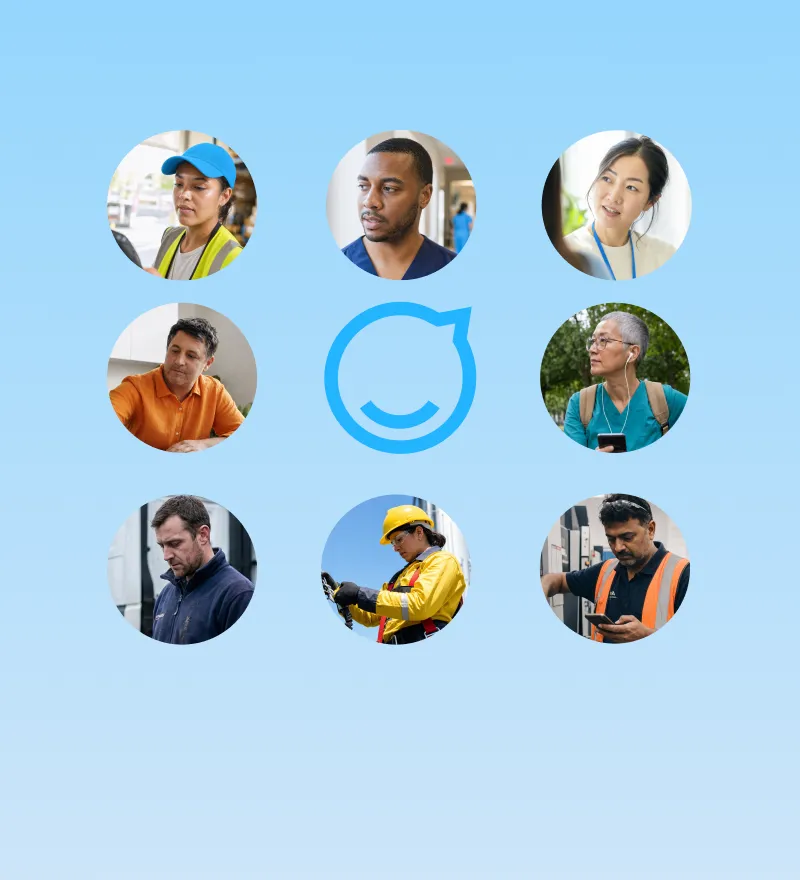
Kevin Hähnlein, who leads marketing and strategic advisory for Staffbase in the UKIMEA, made one of the most important arguments of the day. For years, frontline workers were excluded from the digital workplace. They’re now being excluded from the AI workplace too. The trusted infrastructure exists, but the last mile doesn’t reach the majority of the global workforce like the nurses, the drivers, the shift leads, and the warehouse staff.
When trusted guidance doesn’t reach them, they fill the gap themselves. Private WhatsApp groups. Screenshots passed between shifts. Consumer AI tools used on personal phones to translate or summarize things the company should have communicated clearly in the first place. That isn’t just a communications problem. It’s a governance, security, and operational risk problem. And every time it happens, the organisation loses twice. It loses the relationship with the employee, and it loses the data about what that employee actually needed. Alaska Air Group is one example of what closing that gap looks like in practice. 30,000 employees including flight attendants and pilots who rarely sit at a computer, maintenance crews on mobile devices, customer service agents moving through airports, and back-office staff at desks. As David Henrich, Senior Manager of Communication Operations, put it: “We had this existing one-size-fits-all intranet, but one-size-fits-all does not work in our industry.” When Alaska built a single platform that met every one of those employees on the device they actually use, the result wasn’t gradual buy-in, it was 85% adoption within two months and 99.5% by the end of year one. That’s what happens when the answer reaches everyone, not just the people sitting near a screen.
This is where the employee experience platform earns or loses its claim to the category. A platform that only serves desk workers in HQ isn’t an EXP. It’s an intranet with better branding. The logic here is the one we keep coming back to because if you solve for the hardest-to-reach employee, then you solve for everyone. Design for the nurse on a double shift, the driver between drop-offs, the shift lead with a few minutes in the locker-room, and you build something that turns out to be effortless for the person at a desk too. The platforms that will define the next era are the ones that reach every employee with a trusted, accurate, actionable answer at the moment they need it, in the language they speak, and on the device they have in their hand.
Where does this leave us?
Governance, trust, and reach used to be separate conversations. Different owners, different tools, different ways of measuring success. AI has brought them together. Once an AI layer sits between your content and your employee, you can’t be trusted without being accurate, you can’t be accurate without governing what the AI draws from, and none of it matters if it never reaches the people doing the work. What were three problems are now three shades of one. And employees either feel the answer in front of them is trustworthy, current, and theirs, or it isn’t. They don’t see the architecture behind it. They just know whether it’s right.
Which brings me back to R.E.D.
Relevant, easy, distinctive is still the bar, but what’s changed is where the test gets applied. You used to create something and then check whether it was relevant, available, and unmistakably yours. But once an AI layer sits between you and your employee, you can’t add those qualities after the fact anymore. They’re either built into the source the answers are drawn from, or they’re missing from the answers that reach people. Relevance, ease, and distinctiveness stop being edits and become architecture.
The thread running through VOICES said the same thing a hundred different ways: In the AI era, trust isn’t earned at the end. Like every elite team, it’s designed from the start, or it isn’t there at all. That is what the next era of employee experience will rely on. And the most memorable thing about the day wasn’t from any single session, it was a room of leaders who’d already stopped debating whether AI matters and moved on to the harder problem of making it trustworthy. The employee on the receiving end may never see that work, but they will definitely notice the difference.